
-
Where does it hurt?
Common conditions
Treatments
- Fees
- Corporate DSE
- Programs
- Shop
- Contact
Mappin House, 4 Winsley St, London W1W 8HF
Mappin House, 4 Winsley St, London W1W 8HF
Discover how an osteopath can help with jaw pain. Learn what commonly causes it, what osteopathic treatment involves, and when to see a dentist or GP first.
Not sure whether your pain is coming from the jaw or a tooth? See our guide on TMJ or toothache.
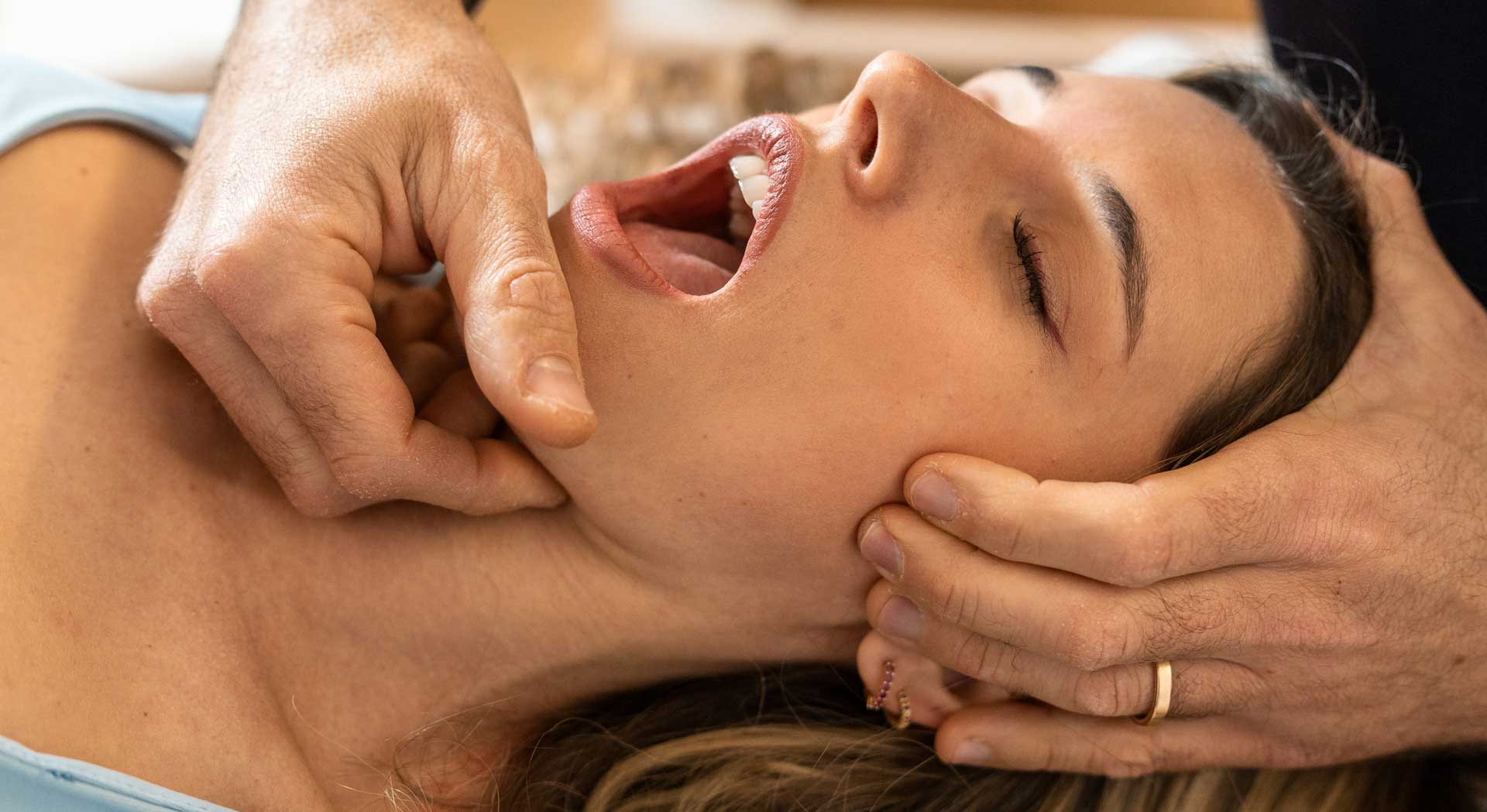
Jaw pain can be frustrating, and it can affect eating, talking and sleep. If you have wondered whether an osteopath can help, this guide covers the common causes of jaw pain, what osteopathic treatment involves, and when you should see a dentist or GP instead. It draws on information from the NHS and the Mayo Clinic.
Jaw pain has several possible causes, including temporomandibular joint (TMJ) disorders, dental problems, stress-related muscle tension and injury. The TMJ is the hinge that lets your jaw move when you talk, chew and yawn. When the joint or the muscles around it are irritated, pain and stiffness can follow.
Because the causes overlap, it helps to have the pain assessed before deciding on treatment.
Osteopathy looks at the whole body rather than just the sore spot. For jaw pain, an osteopath considers the jaw together with the neck, upper back and posture, because tension in these areas can feed into jaw symptoms.
Research on manual therapy for jaw pain is limited and mixed, and results vary from person to person. Osteopathic care is not a replacement for dental or medical care, and an osteopath will refer you on if your symptoms point to something else.

Osteopathic treatment for jaw pain may include:
Your osteopath may suggest simple measures to do between appointments:
Avoiding chewing gum, reducing clenching during stressful moments and looking after your sleep can all help while the jaw settles.
An appointment for jaw pain usually involves:
Jaw pain sometimes needs more than one kind of care. A dentist can check your teeth and advise whether a night guard is suitable, and your GP can review medication and rule out other causes. Osteopathic care can sit alongside both, and we will say so if we think you should be seen elsewhere first.

Yes. An osteopath can assess the jaw, neck and upper back and use manual therapy and advice to ease muscle tension and help the jaw move comfortably. If your pain looks dental or needs investigation, we will refer you on.
If the pain is in one tooth, or there is swelling or a fever, see a dentist first. If your teeth have been checked, or the pain is around the joint with clicking or tightness, an osteopath can assess it. Many people benefit from both.
This varies with the cause and how long you have had the pain. Some people notice a change after a few sessions, while others need longer. Following the exercise and self-care advice makes a difference.
Osteopathy is generally considered safe when performed by a registered practitioner. Tell your osteopath about any medical conditions, and if you are pregnant, so they can adapt your treatment.
Gentle jaw exercises, stress management, avoiding gum and hard foods, and keeping good posture can all help. Your osteopath can advise on what suits you.
If you are living with jaw pain, an osteopath can assess what is contributing and help you plan treatment. Every case is different, and results vary from person to person. You may also find our guides on TMJ pain treatment and TMJ treatment options useful.
Our osteopaths at Mappin House, 4 Winsley Street, London W1W 8HF, can assess your jaw, neck and posture and advise on next steps. Book an appointment or see our fees.
This article is for information only and does not replace professional medical advice. Always consult a healthcare professional before starting any new treatment.