
-
Where does it hurt?
Common conditions
Treatments
- Fees
- Corporate DSE
- Programs
- Shop
- Contact
Mappin House, 4 Winsley St, London W1W 8HF
Mappin House, 4 Winsley St, London W1W 8HF
Explore TMJ treatment options, from self-care and dental appliances to osteopathic care, and learn when to seek medical or dental advice.
Not sure whether your pain is coming from the jaw or a tooth? See our guide on TMJ or toothache.

Temporomandibular joint (TMJ) disorders can be painful and disruptive, affecting how comfortably you eat, speak and sleep. This guide answers a common question: is there treatment for TMJ? It covers causes and symptoms, self-care, medical and dental options, and where osteopathic care fits in. It draws on information from the NHS and the Mayo Clinic, and is for information only, not a substitute for professional medical advice.
The temporomandibular joint is the hinge connecting your jaw to your skull. It lets you move your jaw up and down and side to side for chewing, talking and yawning. When the joint or the muscles around it are irritated, you can notice pain and a range of other symptoms.
TMJ disorder describes problems with the joint, the muscles and the surrounding tissue. The exact cause is not always clear, and can include injury, arthritis, or clenching and grinding of the teeth, often linked to stress.
The answer to the common question is yes: there are several routes to treatment, from self-care at home to dental and medical care and osteopathic treatment.
Understanding what is contributing helps in choosing the right approach. Possible factors include:
If you have any of these symptoms, it is sensible to have them assessed so you can decide on the right treatment.

Diagnosis usually starts with a medical history and a physical examination. Your GP or dentist may arrange imaging such as X-rays, CT scans or MRI to look at the joint. An assessment by a dentist or an osteopath can also help work out what is contributing to your symptoms.
Getting symptoms checked early means you can start with simple measures and be referred on if needed.
Treatment depends on the severity of your symptoms, the likely cause and your general health. Options range from conservative self-care to more specialised care.
Self-care is often the first step:
The NHS suggests similar self-care measures as a first step.
If self-care is not enough, a clinician may suggest jaw exercises to improve movement, and behavioural approaches to reduce clenching and grinding.
For more severe pain, a doctor may prescribe medication, such as anti-inflammatory drugs, muscle relaxants or, in some cases, a low-dose antidepressant for chronic pain. Use these only under a healthcare professional’s guidance.
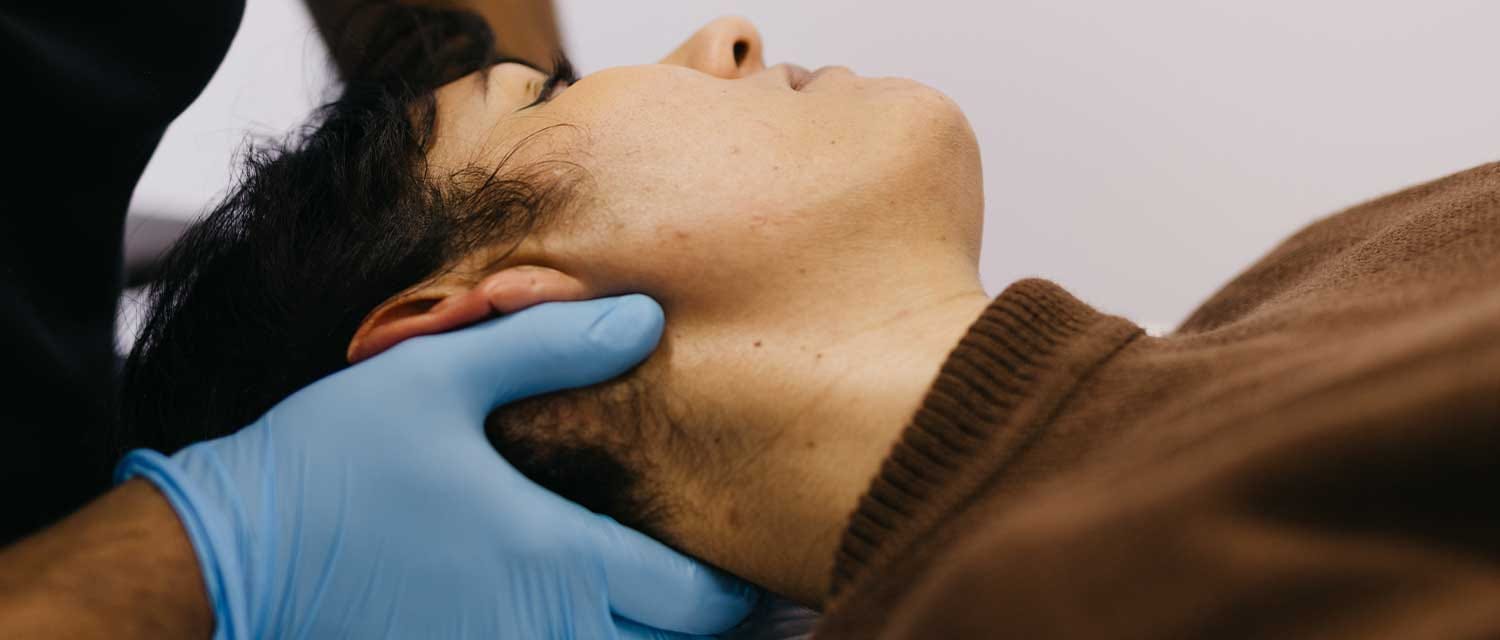
Osteopaths take a hands-on, whole-body approach to jaw pain. At MHV Clinic, we assess the jaw together with the neck and upper back, and treatment may include gentle soft-tissue work and joint mobilisation, with advice on posture, jaw rest and exercises. It can sit alongside dental and medical care. The evidence for manual therapy in jaw pain is limited and mixed, and results vary from person to person.
If self-care and osteopathic care do not give enough relief, your dentist or doctor may suggest more specialised options. These are usually kept for more persistent or severe cases.
Splints or mouth guards, made by a dental professional, can reduce teeth grinding and ease pressure on the joint. Ask your dentist whether one is suitable for you.
Corticosteroid injections into the joint can reduce inflammation and give temporary relief for some people, although they are not a permanent solution.
Surgery is a last resort, considered only when other treatments have not helped. It carries risks, and it should be discussed in detail with a specialist.
Many people use more than one approach, for example self-care and stress management first, then osteopathic care, with your dentist or GP involved if the pain persists. An individual plan, developed with the clinicians involved, is usually better than a single fixed treatment.
Yes. Options include self-care, dental appliances, medication and osteopathic care. The right one depends on the severity and cause of your symptoms.
An osteopath assesses the jaw, neck and upper back and uses gentle manual techniques and advice to ease muscle tension and help the jaw move comfortably. They will refer you on if your symptoms point to a dental or medical cause.
If your symptoms worsen, or you have severe pain, swelling or a fever, see a healthcare professional promptly.
As with any treatment, there can be risks. Medication and injections can have side effects, and surgery carries inherent risks. Discuss the options with your healthcare provider to decide the safest approach for you.
For more information on TMJ disorders, see the NHS and the Mayo Clinic.
Our osteopaths at Mappin House, 4 Winsley Street, London W1W 8HF, can assess your jaw, neck and posture and advise on next steps. Book an appointment or see our fees.
This article is for information only. It is not a substitute for professional medical advice, diagnosis or treatment. Always seek the advice of your doctor or another qualified health provider about a medical condition.