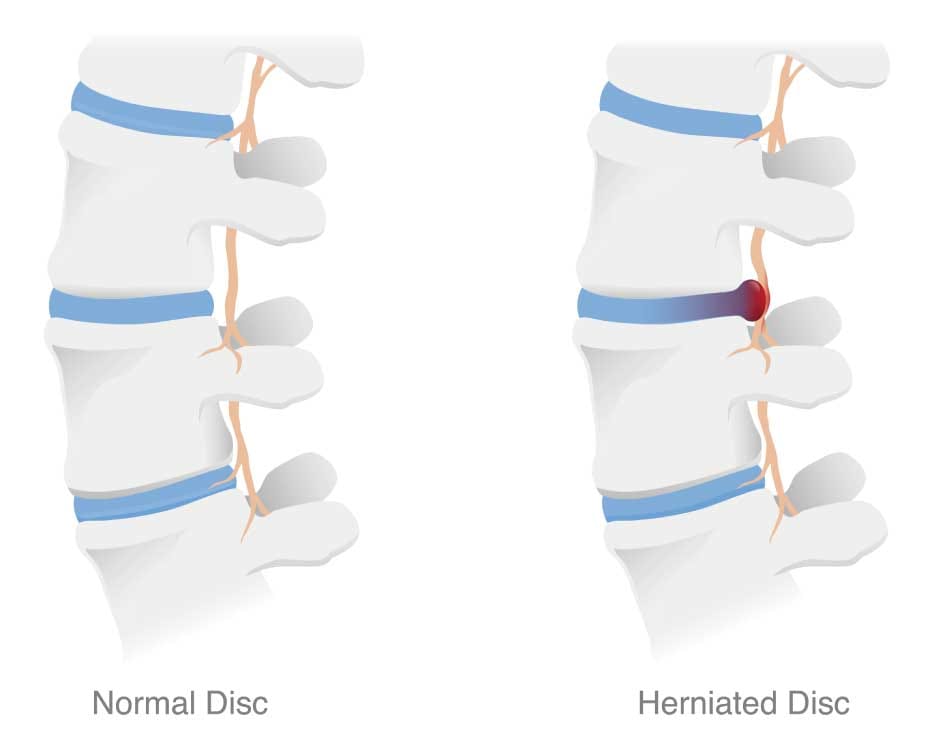
Slipped discs can occur in various parts of the spine, each affecting different areas of the body:
Cervical herniated disc
This type occurs in the neck region and can cause pain in the neck, shoulders, arms, and hands. It may also cause tingling or numbness in the upper extremities.
Thoracic herniated disc
Although less common, slipped discs can happen in the upper and middle back. Pain in this area may radiate around the chest or abdomen.
Lumbar herniated disc
The most common type occurs in the lower back. It typically causes pain in the lower back, buttocks, thighs, and legs, often resulting in sciatica (pain along the sciatic nerve).
Each type of slipped disc requires different treatment approaches, depending on the affected nerves and the severity of the condition.
The type of slipped disc depends on where the disc sits and how far it has moved. A lower back disc tends to cause pain into the buttock and leg, while a neck disc tends to cause pain into the shoulder and arm. Your symptoms and a hands-on assessment usually tell us which it is.
Signs you need urgent help
See a GP or call NHS 111 straight away if you have numbness around your bottom or genitals
Get urgent help if you lose control of your bladder or bowels
Seek help if weakness in a leg or foot is getting worse
How we can help
Many slipped discs settle with time, movement and the right advice. Your osteopath will check your spine and nerves, ease tight muscles and joints around the area, and give you positions and exercises that take pressure off the disc. If we think you need a scan or a specialist, we will tell you.
We use cookies to understand how visitors use our website and to improve it. Analytics and session recording only run if you click Accept. You can change your mind at any time.