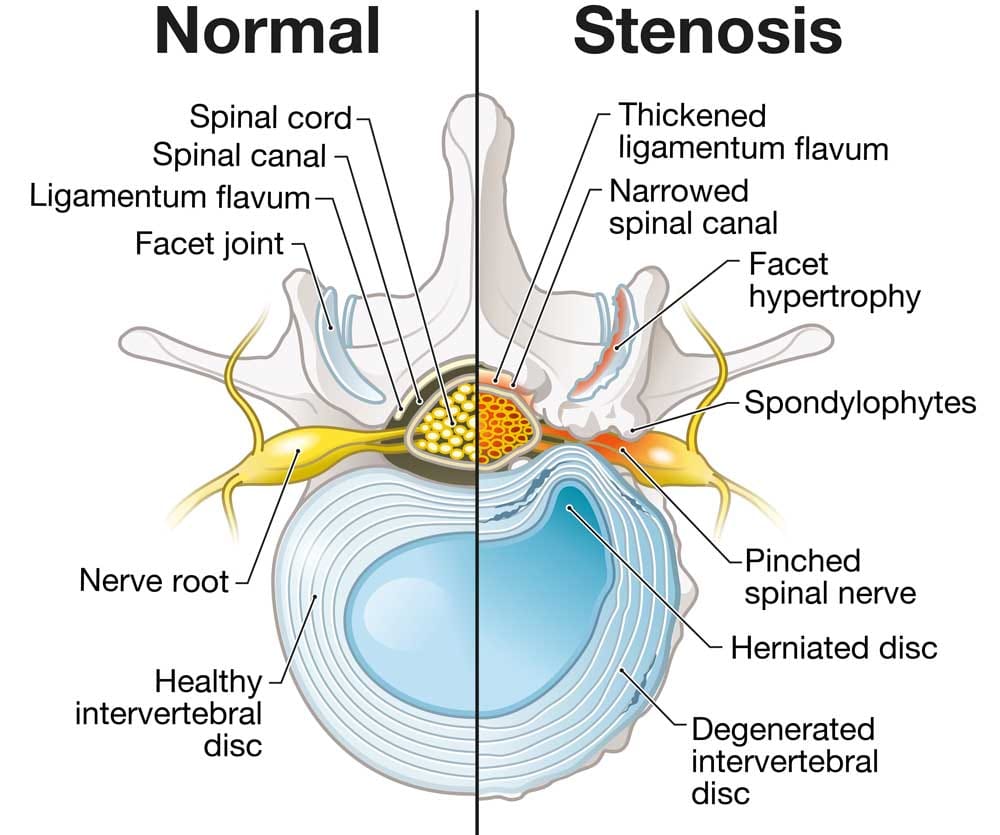
Different types of degenerative disc disease exist depending on the location of the affected discs and the symptoms experienced. The condition can be categorised based on the region of the spine impacted or the specific characteristics of disc degeneration.
Cervical Degenerative Disc Disease
Affects the discs in the cervical spine or neck area. Symptoms may include neck pain, stiffness, and radiating pain or numbness in the shoulders and arms.
Thoracic Degenerative Disc Disease
Less common, this type affects the middle part of the spine, the thoracic region. Symptoms include mid-back pain and difficulty with mobility.
Lumbar Degenerative Disc Disease
DDD most commonly affects the lumbar region or lower back. Symptoms often include lower back pain, stiffness, and discomfort that radiates to the hips, buttocks, and legs.
Disc Herniation
When the outer layer of a disc breaks down due to DDD, the inner gel-like core may protrude, leading to a herniated disc. This can cause severe pain and nerve compression.
Spinal Stenosis
Degeneration can cause the spinal canal to narrow, a condition called stenosis, leading to nerve compression and pain in the back and legs.
How disc problems are assessed
Your osteopath will ask about your symptoms, check how your spine moves and test the strength, feeling and reflexes in your arms or legs. Scans are not always needed, and disc changes on a scan do not always explain pain. If we think you need one, we will tell you.
Signs you need urgent help
See a GP or call NHS 111 straight away if you have numbness around your bottom or genitals
Get urgent help if you lose control of your bladder or bowels
Seek help if weakness in an arm or leg is getting worse
Seek help if back pain comes with fever or weight loss
How we can help
Treatment eases pain and stiffness, improves movement and builds strength in the muscles that support the spine. You leave with advice and exercises to help you stay active.
We use cookies to understand how visitors use our website and to improve it. Analytics and session recording only run if you click Accept. You can change your mind at any time.